
Comprehensive Leather Categories Guide

Updated: Nov 10
Leather remains a key material in fashion, furniture, and lifestyle products. Understanding its varieties helps brands and suppliers choose the right type for their needs. This guide breaks down the main leather categories and explains their features, uses, and quality factors.
Key Takeaways
Full grain leather keeps the complete natural grain, is the strongest category and develops a patina over time.
Top grain leather is lightly sanded to remove imperfections, making it thinner and more pliable than full grain.
Corrected grain and bonded leather suit budget lines, while split and bonded leather wear out faster.
For furniture, full grain or top grain leather gives the best comfort and durability.
Leather Categories Guide: Understanding the Basics
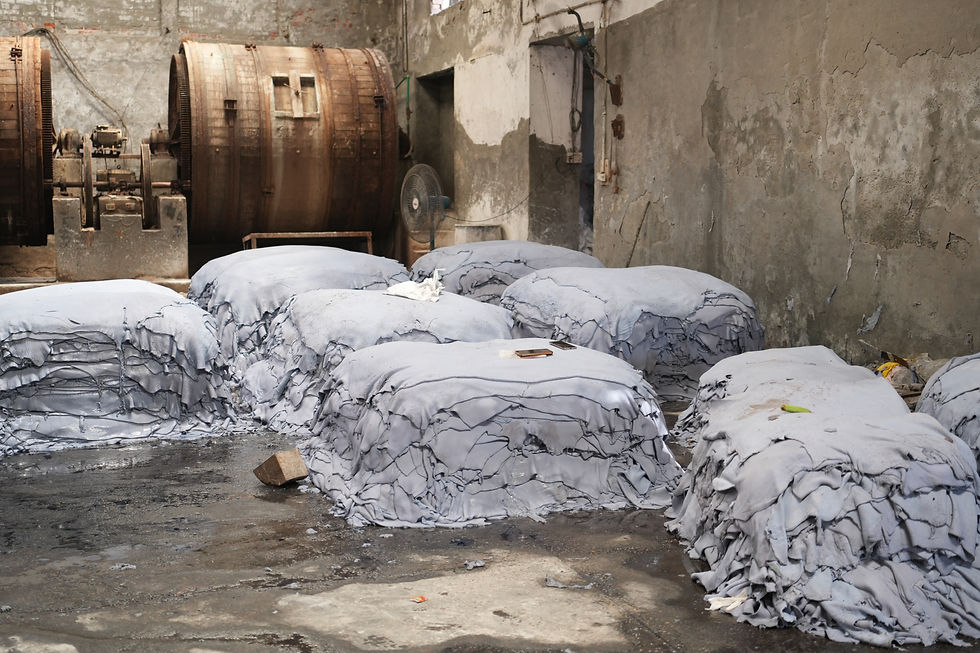
Leather comes from animal hides, mainly cows, but also goats, pigs, and exotic animals. The tanning process preserves the hide and makes it durable. Different tanning methods and finishing techniques create distinct leather categories.
Here are the primary leather categories:
Full Grain Leather: The highest quality. It retains the natural grain and markings. It is strong and develops a patina over time.
Top Grain Leather: Slightly sanded to remove imperfections. It is thinner and more pliable than full grain.
Corrected Grain Leather: Sanded and embossed to hide flaws. It has a uniform look but less natural texture.
Split Leather: Made from the lower layers of the hide. It is less durable and often used for suede.
Bonded Leather: Made from leather scraps bonded with polyurethane. It is the least durable and cheapest.
Each category suits different applications. Full grain is ideal for premium products. Corrected grain and bonded leather fit budget options.

How to Identify Leather Categories
Identifying leather categories requires attention to texture, smell, and flexibility.
Full Grain: Look for natural marks and pores. It feels firm but softens with use. The smell is rich and natural.
Top Grain: Smoother surface with fewer marks. It bends easily and smells like leather but less intense.
Corrected Grain: Uniform surface with embossed patterns. It lacks natural imperfections.
Split Leather: Rougher texture on one side, often suede-like.
Bonded Leather: Plastic-like feel and uniform surface. It may peel over time.
Testing flexibility and observing the surface closely helps distinguish these categories. Smell is also a good indicator, as genuine leather has a distinct scent.
What is the Nicest Type of Leather?
The nicest type of leather is generally full grain leather. It offers the best durability, appearance, and aging qualities. Full grain leather shows natural markings and develops a unique patina with use. This makes each product one of a kind.
Full grain leather is preferred for high-end fashion items, luxury furniture, and premium accessories. It resists wear and tear better than other types. Over time, it becomes softer and more attractive.
However, full grain leather requires proper care. Regular cleaning and conditioning maintain its look and extend its life. For brands aiming to deliver quality and longevity, full grain leather is the top choice.

Practical Tips for Choosing Leather Categories
When selecting leather for products, consider these factors:
Purpose: Use full grain for premium goods. Choose corrected grain or bonded leather for budget-friendly options.
Durability: Full grain and top grain last longer. Split and bonded leather wear out faster.
Appearance: Full grain shows natural beauty. Corrected grain offers uniformity.
Cost: Full grain is expensive. Bonded leather is cheapest.
Maintenance: Full grain needs regular care. Bonded leather requires less but does not age well.
For furniture, full grain or top grain leather provides comfort and durability. For fashion, full grain leather enhances style and longevity. Lifestyle brands may balance cost and quality by mixing leather types.
Expanding Reach with Quality Leather Manufacturing
Brands and suppliers benefit from partnering with manufacturers who understand leather categories and production processes. Efficient OEM and private label production ensures consistent quality and timely delivery.
Choosing the right leather category aligns with brand positioning and customer expectations. High-quality leather manufacturing supports global expansion by meeting diverse market demands.
Understanding the nuances of leather categories helps brands make informed decisions. It also builds trust with customers who value authenticity and durability.
This guide aims to clarify leather categories and their uses. Selecting the right leather type is crucial for product success and brand reputation. Quality leather manufacturing remains a cornerstone for global fashion, furniture, and lifestyle brands.
For more detailed information on types of leather, explore trusted resources and consult with experienced manufacturers.
Sanwas International is an LWG-certified OEM and private label leather manufacturer based in Jalandhar, Punjab, India, producing footwear, outerwear, furniture leather and hides for brands in India and worldwide. MOQs are under 500 units per style, lead times run from 72-hour sampling to 30-day bulk production, and every order goes through AQL inspection.
Frequently Asked Questions
What is the difference between full-grain and top-grain leather?
Full-grain leather keeps the complete natural grain, including marks and pores, so it is the strongest and develops a patina. Top-grain leather is lightly sanded to remove imperfections, which makes it thinner, more uniform and more pliable.
Is bonded leather a good choice for a brand's product range?
Bonded leather is made from leather scraps or fibres bound together, so it costs less but wears out faster than full-grain or top-grain leather. If you use it for budget lines, describe it accurately on labels and product pages.
Which leather category should I choose for sofas and upholstery?
Full-grain or top-grain leather is the usual choice for furniture because it offers comfort and durability under daily use. Confirm the finish, thickness and colour with a physical swatch before you place a bulk upholstery order.
Can I mix leather categories within one product range?
Yes. Many brands use full-grain leather for hero products and corrected-grain leather for value lines. Write the leather category, thickness and finish for each product and component in your tech pack so every quote covers the same specification.
How do I make sure the factory uses the leather grade I approved?
Specify the grade, thickness in millimetres, finish and colour in writing, keep a signed-off swatch, and have the leather checked during pre-shipment inspection. At Sanwas International, every order goes through AQL inspection before dispatch.
Need Help Choosing the Right Leather Grade? Request a Quote
Brands, sourcing managers, retailers and importers can share their product category, leather type, target quantity, delivery city in India or destination country, preferred Incoterm and target delivery date. Sanwas International supplies brands across India and exports worldwide.
Include these details in your enquiry:
Product category and style (footwear, jacket, upholstery leather, hides or crust)
Leather type, finish and colour
Target quantity per style and colour
Delivery city in India or destination country, plus preferred Incoterm
Target delivery date and whether you need a sample before bulk
Contact Sanwas International
Mob: +91 8728858686
Address: 308 Leather Complex, Kapurthala Road, Jalandhar, Punjab 144002, India


Comments